Monday, August 21, 2023

The Girl Raised As A Future Daughter-In-Law (South Korea, 1965)

In an unspecified period of time, probably centuries ago, there was a very poor girl called Jeom Soon. She was already a young adult, and would have an arranged marriage with the son of a wealthier family because she lived with her widow mother and they were about to lose their poor house and then the marriage would be a way for her mom to save her house.


And Jeom Soon went, she moved out to the house of her future husband. He was much younger than her and his father was nice, but her future mother-in-law, Lady Park, was terrible, treated her as a maid. Jeom Soon had to do all the heavy work of the household while Lady Park did nothing and she really maltreated and humiliated her future daughter-in-law. However, despite the difference of age, Jeom Soon got along very well with her future husband. Her future husband loved Jeom Soon very much and was very caring with her, which just worsened her situation because when Lady Park realized that, she thought that her daughter-in-law would steal her baby boy from her. And then her husband, the future father-in-law, tried to control the temper of his wife but it didn't work.


One day, Jeom Soon went outside to get some water and then she met by chance a suitor that she had in the past who begged her to leave the house of her in laws, that he would pay her debt with them but she refused even to talk to him. Jeom Soon told him directly that she was engaged to someone else and he was supposed to forget about her. Unfortunately to Jeom Soon, some other women of the neighborhood saw her talking with this guy, and they told Lady Park. Right Afterwards, Lady Park really beat Jeom Soon up with a whip. Some days after this humiliation, the girl got sick. And when Jeom Soon got sick, Lady Park sent her back to her mother because she didn't want to stay with that sick girl who would be unable to do anything in the household. However, Lady Park’s son, even though he was still a child, ended up following his future wife because he loved her very much. He wanted to stay with her. Then Lady Park arrived in Jeom Soon’s house, insulted her mother and took her son out of there by force.


After this event, Jeom Soon’s mother realized that she would be forced to sell her house to pay her debts, and then they would have to find somewhere else to live, maybe even on the streets. Lady Park’s son begged her not to insult Jeom Soon’s mother, but it didn't work out. Therefore, the engagement was over, because after all, Lady Park brought Jeom Soon back home to her mom as if she was a bag of potatoes. And she had a terrible temper, Jeom Soon’s mother realized that her daugther was brutalized there and did not want Jeom Soon to return anymore.

However, Lady Park’s son and his father did not want to accept it because they loved their future wife and daughter-in-law, after all. Thus, in order to change Lady Park’s mind, the son pretended he was sick while his father tried to find a shaman who would tell his wife that it would be better to bring Jeom Soon back home because she would be precious to the family and if she did not do that, her baby boy would pass away very soon. Of course that Lady Park got very scared. It was her only child and she did not want to lose her son. And then she discussed with her husband if it would be better to bring Jeom Soon back or not.


In the meantime, Jeom Soon and her mom sold their house and moved somewhere else. They were totally unaware that Lady Park wanted Jeom Soon back, because both families lived in villages that were relatively distant from each other. At the same time, the Lady Park genuinely regretted her actions and wanted Jeom Soon back, realizing that she was caring with her son, she did all the housework, she was never a bad person, and she tried to please her in every wat. But then, of course, Jeom Soon and her mom had already left home with their belongings. But they left on foot, so it would not be too hard to find them.


At first, while Lady Park tried to find Jeom Soon and her mother, they went to the wrong way, but after a while they got to find the girl and her mom. Then, Lady Park talked to them. Jeom Soon’s mother was extremely insulted of the treatment that Jeom Soon had, because she knew that her daughter was beaten up, humiliated, her work was exploited, and of course that she did not want her daughter to return. However, Jeom Soon only had problems with the mother-in-law, but she missed her father-in-law and her future husband. Despite the big difference of age, there was genuine love and affection between them both.


Thus, when Jeom Soon realized that her in-laws wanted her back, the girl wanted to return. She understood that Lady Park was doing the best she could, then she convinced her mother to let her go. And this is what exactly happened. As Jeom Soon’s mother was ill, she could not leave her mother behind. So, Lady Park invited her mother to live with them too. At first, the mother refused because she thought she would be exploited and treated as a maid too. But the Lady Park convinced her otherwise, claiming that she regretted everything she did, that she had disgraceful attitudes before. Therefore, It would not happen again. Then, Jeom Soon’s mother was convinced to go. After all, both mother and daughter did not have anywhere else to go anyway. So they went to Lady Park’s home.


Furthermore, in the very end of the film we can see that the boy, although still a child, got to follow his mother and take his future wife home. Jeom Soon was very touched by this act. And then they were happily together home. It seems that after all this mess, nothing bad would happen again.


This film provides valuable insight about how life was like in ancient Asia. We do not know exactly the time frame when this plot happened, but we can see how people lived by doing manual work, how they related to each other, the clothes they wore. So it's a really nice time machine. Those old Korean films, they are important to understand the current K-dramas. It's a good cultural experience.


If you don't get to find the films in DVD or online, you can find some writings about them in blogs, in websites. So it's a part of cinema history that is really important to know, but at the same time it's so underrated. It is nice to see how love can happen, even though there are bad circumstances and how poverty can crush people so much, but at the same time we can see that things can have a good and positive outcome.

Saturday, August 19, 2023

Rope (USA, 1948)

Two guys strangled to death their old colleague. After the crime they put his body in a trunk and then they organized a kind of a party and invited the parents of the colleague they have just killed, his fiancé and another common colleague they had. One of the guys who committed the crime was really sure about what he wanted to do, but the other guy seemed to have been forced by the other one to kill. It seems that he did not want too much to kill, but the other guy influenced him negatively. Then the guy who seemed to be a kind of leader, and the one who really was certain and proud of his cruelty, also invited to the party a guy who used to be his teacher in the college, the latter played by actor James Stewart.


We can observe that this specific teacher had some weird beliefs that murder must be something committed by a few privileged people, and then the lives of those people who did not matter to society must be eliminated. There were even comparisons with the terrible events that happened in World War II that killed many people and they also thought that some people were superior to others. So, this teacher had this kind of mentality. The criminals invited the teacher to the party because they thought that if the teacher knew about the murder, maybe he would understand why they committed the murder and even applauded them.

The criminals also had an elderly maid and she realized that there was something wrong in the house because she made the dining table, she organized everything, the plates, the glasses and all of a sudden the guys changed their minds and wanted to serve food in a trunk and the table was so well organized and they seemed nervous. The maid quite could not understand that. However, the party began without problems. The parents and the fiancé of the murdered guy arrived and all of them wondered why the guy didn't arrive yet. He was never late. His fiancé was worried. His parents were worried too. But of course that they could not imagine they were having dinner in the trunk with the body of their son, of their loved one, inside that.


Then the teacher arrived and he started to realize more than anyone else that there was something wrong in that house. The guy who was not too willing to kill was extremely nervous. The teacher had been the former teacher of all of those guys, both guys who committed the murder and then of the colleague of them was called, and then he saw that they were weird but it was just a suspicion. After a while, the maid told him that she also thought that the guys were weird but the teacher had no proof of his suspicion. After a while, the parents of the murdered guy decided to leave the party because they were too worried with his son. The teacher left too. But when the teacher was leaving, the maid instead of giving him his hat, she gave him, by mistake, the hat of the guy who was murdered. And the teacher knew that because of the initials of the murdered guy inside the hat. Then he had some sort of evidence that something was actually wrong. After a while, he returned to the apartment pretending to have forgotten his cigarette case and then he started to make questions. He pretended that he wanted to have a drink, to talk and after a while that guy who wasn't too willing to kill was completely nervous and ended up confessing the murder.


The other guy who was the leader and thought that murder was supposed to be committed by a superior few also confessed the murder to the teacher and the teacher, instead of finding that wonderful, got horrified and even more shocked when he realized it was his theories that influenced they to do that and he said to the guys that he was extremely ashamed of his theories for the first time in his life, that he wasn't aware of the harm that they could cause, and then he made a sort of speech that is very interesting, that who are we to decide who is superior, who is inferior? We are not God and all lives have value and everyone deserves to live, to be happy, to work, to make their dreams come true. After this moment of tension, in order to call the attention of the police, the teacher shot by the window. At that moment, both guys, especially the one who was the leader, were coldly waiting for the police to arrive. It must be pointed out that it is not shown what will happen with the characters afterwards, but it is implied that they were arrested and punished for their crime.


It is a very interesting film, especially because it was made a few years after the end of World War II when this kind of racist and eugenic ideologies were in vogue in some groups. It is a good analysis of the perversity of human mind. The criminals were so cruel that they used the rope with which they killed the guy to tie the books they gave to the father of the guy they had just murdered. And they showed no remorse. We must also keep in mind that the other guy who was too nervous, he did not exactly show any remorse. He was nervous in fear of being caught. He was not exactly regretting what he did. He was just a little bit more fearful and more influenced by the other guy. But it was not remorse for the life he had just taken. Another point that stands out is that the murders did not call their other colleague to the party because they found the guy nice or anything. It is because the fiance of the murdered guy used to be his girlfriend before she started dating the murdered guy. Thus, the criminals kind of wanted the woman to cheat on her recently deceased fiance with her former boyfriend, which was something really sick. This film is famous for its long shots. It's one of the most experimental films by Alfred Hitchcock, and in a short period of time, the narration is shown in a very smooth way, and there's nothing lacking in the suspense. The long shots give an extra effect of the tension, because we feel as if we were by the side of all characters. So we do not feel as if we are watching, we feel as if we were there seeing everything happening. Nearly all the scenes took place inside the apartment, except for the initial scene of the film, which took place on the street. It is a remarkable example of how perverse some people can be and how their minds work. It is also important to see the danger of some weird ideologies and how they can be used as an excuse to commit the most terrible acts. It is a film that never gets old.

The Only Son (Japan, 1936)

This film talks about a poor widow and her son. At first the mother couldn't really afford the son to continue with his education. However, her son had a teacher who really encouraged her to make her son to keep on studying. But to do it, the mother would need to send her son away to Tokyo because they lived in a small city. She would need to send him to Tokyo and pay for his education, which was too much for her because it was a really poor family. However, she realized that the boys of the neighborhood were going to Tokyo to have an education and she didn't want her son to miss an opportunity, so she made all the sacrifices possible, she struggled so her son could have an education in Tokyo. Many years have passed and her son was now 27 years old and then she decided to visit him there by surprise.


And when she arrived in Tokyo, she realized that her son wasn't as successful as she imagined. At first, she was scared, not necessarily with the city, but with the neighborhood where he lived, which was really poor, and she also got to know that her son was married and had a baby son of his own. And of course she was in shock because she imagined that her son would study and be successful. And the son, he was happy to see his mother, of course, but he was extremely sad that his mom saw him in this situation. He would rather her to visit him later when he had a better financial situation.


The son’s wife was a really good person. She treated his mother as it was her own mother. She was very gentle with her. The son treated his mom wonderfully too. He tried to borrow money from other people, so he could take his mom to places. But, of course, that she couldn't disguise the fact that she was disappointed. The son talked to his mom in private and confronted her about it. And he said that he knew that she was very disappointed, that he did everything he could, that he was aware of how much she suffered to pay for his education, that he tried his best to honor all her effort. But Tokyo is a very populated and big city, competition was wild, that he wanted to be more than a night school teacher. Then the mother said that he shouldn't give up so easily, he was still young, his life was just beginning, and he shouldn't act like a coward, that he should keep on trying to improve his situation, he was still young, he had the means.


And then when they talked about the same subject again at night, his wife overheard everything and started crying. And she was feeling very bad that her mother-in-law was in this situation, sad all day long, taking care of her grandson. And then she decided to do something. She sold her kimono and gave the money to her husband so he could afford taking his mother to places, to go out with her so at least she could cheer up a little bit. And they planned to do just that. The entire family would go out, take his mother to no more corners of Tokyo. However, a boy of the neighborhood had an accident with a horse and he needed to go to the hospital.

Then the elderly mother's son took the boy to the hospital and even helped his mother with some pocket money for the expenses because his son didn't have anything serious in the accident but he broke her leg so he would need some care and it would be difficult for her because she was very poor too. After a while, when they left the hospital, the son told the mother that this event ruined all the plans that he had for today. He intended to go out with her, to do things together, but this accident, it destroyed everything. Then the mother told him that she was proud of him because when you very poor, the generosity of other people make you feel so grateful and that she knew how the neighbor felt because she was very poor too and she said that it was much better that her son had helped the neighbor than going out with her that it would be the best memory she would have from her time in Tokyo.

When they were talking about the financial situation of the son, she confessed to him that she had to sell her house to pay for his education and that she was sleeping in the dormitory of her workplace, but that he shouldn't need about her, that she doesn't care about the housing or anything. All she cares about is that he study hard and then improve his financial situation. After the mother left and returned for her city, the son told his wife that he would return to school and try to specialize to give classes to college students, so he would earn more money, because his son, his baby son, wouldn't be a baby forever and he would need money.


We can see in the beginning of the film that the elderly mother returned to her village. And when her friend asked about Tokyo and about her son, she said that Tokyo was beautiful, that her son was well, that he became a great man. So she said good things about her son, that he found a good wife. She really liked his wife very much, but we could see on her face that she was extremely sad because she thought her son would be more successful. The plot of this film is very universal because parents always want their children to have a better situation than they have. They always want the best for their children. And when they realize that their children didn't do as well as they expected of course that they feel sad.

On the other hand, she could recognize that her son was a very nice boy, who had a nice wife, a nice family, who never did anything wrong, never stole from anyone. She also saw that the teacher of her son, who also went to Tokyo, instead of still being a teacher, he was working in a restaurant frying food. So, things were very difficult for his former teacher too. So it wasn't only her son was struggling. And that competition in a big city is indeed very bad. But she had the highest expectations about her son because he was everything she had in life. And unfortunately, it wasn't as she imagined and it's a very touching film, even sad, but it's a plot that never gets old, it's delicate as Ozu's films usually are. It is one of the few Ozu’s films were his sentimentality is openly shown, in contract to most of his films, where it is more covered.

Sunday, June 12, 2022

An Andalusian Dog (France, 1929)

This famous silent film short is a result of the cooperation of Luiz Bunel and famous surrealist artist Salvador Dali in the production/direction. And much has been said – even by Dali himself -that nothing in this film was meant to make any sense, still many reviewers and scholars have tried to find some meaning and connection between all scenes throughout the decades. Maybe an attempt to try to find coherence by all means or would there be any sense in the images shown, after all?


The film starts with a tango song in the background and the image of a man sharpening a razor. He goes to a balcony while holding the razor and smoking a cigarette. Then a woman who is sitting down is shown with her eye being cut by the razor at night. Eight years later, a man is shown riding a bicycle on a deserted street in a sunny day. He is wearing unusual clothes and the street looks beautiful. Right afterwards, the woman who had her eye cut a while ago is shown while sitting down on a chair and reading something. The background music changes, the guy on a bicycle pops up again. The woman gets tense, stops reading and goes to the window. The guy on a bicycle is shown again, this time from above. He falls off the bicycle on the sidewalk and the woman goes downstairs to help him.


The woman is shown in her bedroom upstairs again. She is holding a tie and puts it on the bed together with the clothes that belonged to the man who fell off the bicycle. She sits down on a chair and stares at the bed with the man’s clothes on it. Suddenly, a man is shown in the bedroom and he’s looking at one of his own hands and there are ants on it, which seems to be a symbolism of his urge to kill. The images change abruptly, almost in a raw way, and we can now see a man with androgynous features and clothing playing with a human hand with a can while a crowd is around him. Would it mean the use of of human suffering and misery for the entertainment of masses? Would this man be blind or something like that? A policeman comes and disperses the crowd. The man keeps on playing with the human hand with his can and the policeman bents down to collect the hand, puts it on a small box and delivers the hand back to the man.


Both the man and woman in the bedroom follow up this commotion from their window. The man on the street remains there, lonely, holding his small box with the human hand in it until he is hit by a car. The other man by the window seems to be deeply impacted by the event unfolding downstairs. The background tango song is back. The man in the window looks at the woman besides him in a rather scary way and then the shock: He tries to sexually assault the woman by his side even though she refuses his advances. The woman pushes him and runs inside the bedroom and tries to protect herself in any way she can. 


Then the man pushes the strings of two pianos and the audience can see two dead donkeys and two priests also being pushed, which weights down on the man heavily. Would it be a representation of the weight of the church and authorities over the back of common citizens? Upon seeing this, the woman leaves the room in horror. The man tries to follow her to no avail and then it is still visible to the audiences the ants on his hand, which might mean his wish to kill and the fact that his bad passions dominated him. Right afterwards the man is suddenly shown laying down on the bed in the same room where he was in the previous scenes.


“Around three in the morning” (as an intertitle says), another man rings the bell and the woman who was previously in the bedroom opens the door. This new man goes straight to the bed where the another man is laying down and he apparently urges him to stand up. The man laying down is quite puzzled and has a submissive attitude. Would this new man be the boss urging his employee to stand up and work, perhaps?


Another intertitle says “Sixteen years before”. Both guys now appear to look the same, even though the submissive guy keeps his oppressed attitude unchanged. There is a messy office desk with torn and dirty papers on it. One guy hands over a book to the other, the image blurs briefly and the submissive man is holding a gun towards the bossy man. He shoots. Would it be the embodiment of the oppressed becoming the oppressor and representing the change of luck of a person in life?


When the shot guy falls, he falls in a place outdoors and we can see the back of a half naked woman, who looks like the woman who was previously in the bedroom. The woman disappears after a short while. Some men are shown in this outdoors place and they find the body of the man who was shot and he is carried by the other man. It seems it was already too late to save his life. Would it be a representation that everything in life will eventually come to an end?


The old bedroom is shown once more. The woman is returning to the bedroom, there is the close up of a small butterfly. The man was waiting for her, which means that the old couple of the bedroom is reunited once more. The man rubs his hand on his lips and we can see that his mouth was deleted from his face. The woman applies some lipstick in her own lips. The man still has no mouth and the woman realizes that her body hair was also gone. She pulls a face on the man and leaves the bedroom again.


It’s windy outside, we can see the man on a beach, the woman walks towards him and the man on the beach is appears to be the same man who has just been seen in the bedroom but in another outfit. He shows his watch to the woman, as if he was reprehending for having arrived late. The woman kisses the man and they embrace. The beach gets muddy and they see some garbage, including old clothes, which look like the clothes that belonged to the man who fell off the bicycle in the beginning of the film. Would it be a representation of leaving the past behind and start a new life?


The couple walks happily on the beach and then another intertitle says “In the spring” and the couple is shown buried in the sand, apparently dead. A strong scene which maybe would mean that life is brief and that, despite all ups and downs, it eventually ends for everyone?


A surrealist work of art gives room for all sorts of interpretations. It can mean nothing and everything, all at the same time, but the imagery always makes people uncomfortable and raises lots of thoughts, which is the intent of the surrealist movement. Definitely it is not a film for everyone and it helps audiences if audiences are open minded about non linear plots.

Tuesday, March 8, 2022

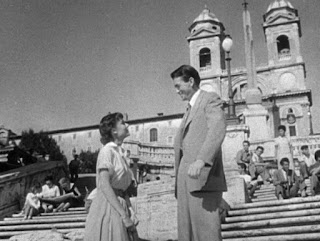
Roman Holiday (USA, 1953)

 Some films age well, some don’t but there are films that only get better as time passes. The story of a princess who spent a day out without the obligations of her secluded life may seem a bit dull for nowadays’ standards. But the discovery of small pleasures in life (the first ice cream, pair of shoes, haircut, etc.) and the carefree relaxation and touching human connections make this film more relevant than ever in world where those feelings seem scarce. It is also a witness of life in post world war 2 era and of birth of a new star, Audrey Hepburn, who is on the main role, and won an Oscar in for this film, in her first major Hollywood role.


The young princess Ann of an unidentified European kingdom is on a diplomatic visit to Italy while on a goodwill tour of European capitals. We can see right in the beginning that her life consists in strict protocols and social obligations without opportunity for entertainment and she is bored with all that, longing to enjoy life without those impositions. We can also see the scenes made in magnificent sceneries, beautiful clothing, sophisticated places, everything emphasizing the luxury life of the princess. In her first diplomatic commitment, which mostly consisted in shaking hands of foreign dignitaries, she was always polite, gentle, did everything expected from her, but she was clearly impatient with all stiffness. 


After the social gathering, princess Ann is seeing in her bedroom behaving silly and frantically like a youth of her own age and then all her obligations gave her an anxiety attack. A doctor was called, who administered her injectable sedatives so the princess could relax and sleep well because she would have lots of commitments on the following day. After being left alone in the bedroom and hearing the sound of people partying she gathered courage to venture outside and explore Rome on her own. She leaves unnoticed after jumping inside a truck.


Unfortunately to Ann the sedative took effect a little too late and she fell asleep on the street at night. Joe Bradley, expatriate reporter for the "American News Service" finds her without having any idea that she was a princess and thinking she is just a random drunk woman. As Joe could not know where she lived he takes her to his house to recover. Meanwhile, it was announced in the press a sudden disease of the princess as a cover up for her disappearance and her press interview had to be canceled.


Joe Bradley was one of journalists supposed to be in the interview, but he overslept and lied to his boss about being there, as he was not aware of the cancellation at first. After a short time his boss told Joe that the princess was weak and therefore her interview was canceled and showed this news in the newspaper. When Joe saw the picture of the princess in the newspaper he instantly recognized her as the girl sleeping in her apartment. He called his Irving, his bon vivant photographer friend so they could both write a reportage on the princess. 


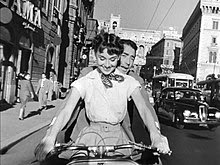
When the princess wake up, she take a shower and left Joe’s apartment. Having never carried any money with her, she borrows some with Joe and went outside. Joe follows her. At first Ann is not used with those crowds around her and the frantic pace of the big city, but she adjusts after some minutes. She buys a pair of shoes, have her hair cut and then Joe met her and they have an ice cream together. In order to gain time while he waits for Irving to arrive, he volunteers to show the city of Rome to Anna and she accepts it. He shows her lots of touristic attractions and have the best fun, including a rather awkward scooter riding by both Ann and Joey, which caused lots of physical losses for people around. After spending a while at the police department they are finally released after Joe lying that he and Ann were getting married.


After being released from the police station, they attend a party by the sea in the evening. When things were so nice and relaxing at the party with people dancing and chatting and Ann even met the hairdresser who cut her hair that afternoon, it arrives agents from the secret service of Ann’s country in the party. Her father had asked for the secret service look for Ann and bring her back home. Ann recognizes the agents, tries to run away and then there is a generalized fighting with both Ann and Joe falling inside the river. After they leave the river and Joe heats her up, they kissed, but stop soon when the both realize it is something inappropriate for a princess.


It was all fun and games but 24 hours have passed since Ann had left and everyone was worried with her in the country and her disappearance have already become a diplomatic problem. She knew she had to return to her headquarters without delay. After taking a shower in Joe’s apartment she asked him to drive her to the corner of the embassy of her country in Italy. He does it and it is quite painful for them to say good bye because it was clear they would never see each other again. 


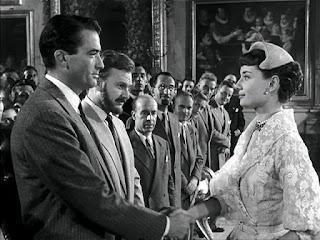
Anna returns and is scolded for having disappeared like that and, as she was back, she had to meet her official commitments in Italy, including the press interview. Upon her arrival in the interview, Ann recognizes both Joe Bradley and Irving in the press area and gets shocked. However, they do not have any intention of publishing the story, it is only that she is not aware of it yet. Acting out of protocol Ann says that Rome was her favorite city among all others she has been recently visiting in Europe and she also expressed her wish to greet the journalists with a handshake. When she greets both Joe and Irving she gets to know to which agency they work for and receive the pictures that Irving took that day and it is stated to her that her day out would remain a secret. And then she leaves Italy and everyone return to their respective worlds after having the time of their lives.


This film remains as a beautiful witness of post World War 2 life and the recognition of importance of a person’s individual freedoms and small pleasures in life. How important it is to enjoy those small pleasures, have good quality of life and healthy congregates with both people and places around us. And how days apparently common can be unforgettable times. In an era when things get  increasingly dangerous and the connection with simple things are sometimes forgotten it is a pleasure to see that people do not need too much to be happy and enjoy life.

Monday, February 21, 2022

Those Country Kids (USA, 1914)

Roscoe “Fatty” Arbuckle and Al St. John (who were respectively uncle and nephew in real life) play two rivals in this in this one-reeler film for the affection of their sweetheart (played by actress Mabel Normand). In the beginning of the film, Mabel is at home and she sees Arbuckle on the fence and goes outside to meet him. They both hug and start talking. After a short time they start arguing but soon reconcile. Mabel’s father sees her talking to Arbuckle, gets furious and goes outside carrying a gun. The father does not actually shoot, but ends up literally kicking Arbuckle out and prohibiting Mabel to ever talk to him again. Right afterwards Arbuckle uses a slingshot to take revenge on Mabel’s father, who wastes no time to shoot back on Arbuckle’s butt. Mabel protests, to no avail.


Then an intertitle announces Mr. Reddy (played by Al St John), another suitor of Mabel, who arrives on horseback. He was very much interested in Mabel, but it was unrequited Mabel because she does not feel the same. Arbuckle sees Mr. Reddy around his girl and gets disgusted and, to make things worse, Mr. Reddy tries to kiss Mabel without her consent. Something has to be done and Arbuckle immediately separated Mabel from the unwanted advances of the other suit. She rewarded the kindness by kissing Arbuckle, who was the man she really loved. Both man start to fight and Mabel takes some distance in fear but it was such big chaos that she ended up being accidentally hit anyway.


Arbuckle retaliates by throwing bricks on his opponent. The situation escalates when a brick is throw towards the house, crosses the window and ends up hitting Mabel’s father by accident. As he was still holding his gun, the gun was also inadvertently shot, which scared all other family members who were at home and unaware of the situation. Mabel’s father got furious again and threw water out of the window and wet somebody else by the mistake. Meanwhile, the fighting between both suitors of Mabel was still going on outside. Mr. Reddy sits on a water well, but Arbuckle hit him with a brick, which made Mr. Reddy falling inside the well. Arbuckle and Mabel try to rescue Mr. Reddy, who was drowning.


Mabel returns home to ask for help and returns with some of her male relatives. In the middle of all mess, Mabel’s mother calls the Sheriff’s Office. The other policemen in the office were sleeping and the sheriff had to wake them up by shooting his own gun to the air. Then the incompetent Keystone Cops come to the rescue. Mr. Reddy is finally rescued and Arbuckle and Mabel try to go away in the middle of confusion, but her relatives realize it and they are chased by everyone – even the Keystone Cops. Fortunately traffic jams were not really a problem back to the 1910s. After this chaotic chase, Mabel and Arbuckle get to arrive in a house, where they meet a clergyman and get married. Much to Mabel’s family annoyance, it was too late to prevent anything and they were already officially married.


Despite having an extremely simple plot, this film is still entertaining with gags easy to understand and as a historical witness of the lifestyle of such long time ago, especially clothing, urbanization and different pace of family life. It is a film to sit down and watching, without questioning any absurdity that the audiences might seem on screen and we all frequently need a film to make us forget about day-to-day problems and just laugh. Recommended cute little film.

Wednesday, February 16, 2022

Mabel's New Hero (USA, 1913)

Keystone Studios (which was opened in September 1912) is remembered by Roscoe “Fatty” Arbuckle, Charlie Chaplin, Ford Sterling and many of it's great comedians but also of Bathing Beauties, which was a group of beautiful women in bathing suits and carefree antics, always so lively and happy, who joined the action with the comedians in order to arise more interest in the audiences.


In this one-reeler film (which means it is circa 11 minutes long), Arbuckle visit Mabel at home and bring her some flowers while two other women listened to that behind a door. Mabel is not very flattered by the attention of Arbuckle and take him by the ear and kick him out of her house. Mabel enter the room where the other two women were and catch them both spying on her. Arbuckle returned to the house, opened the door and entered the room where the three women were. He bring flowers again and seemed very determined to win Mabel’s affection. 


Then we see on the street a fellow called called “Handsome Harry”, a “Divil” among the women, according to an intertitle. He seem to be a mix of a Don Juan and an unpleasant womanizer and has the typical villain look.


The bedroom is shown again, the two women leave and Mabel and Arbuckle are alone. Mabel is furious and slap Arbuckle but fortunately they reconcile a short time later. Meanwhile, the other two women meet “Handsome Harry” on the street, apparently by chance. They go swimming and “Handsome Harry” follow them. Mabel and Arbuckle go to the same place and also bump into “Handsome Harry”, who start watching Mabel from a distance. Both Arbuckle and Mabel exchange clothes to put on swimming suits. When Arbuckle leave his dressing room to meet Mabel he realize what “Handsome Harry” was doing, tell to Mabel about what was going on and both men start fighting. The other two women also returned from their dressing rooms and “Handsome Harry” followed them.


On the beach “Handsome Harry” make advances on the two women, who promptly beat him up. While it happen there is another confusion, as another man made advances on Mabel and Arbuckle beat him up to defend her. When Mabel is a bit away from Arbuckle, “Handsome Harry” approach her and bully her and Mabel also beat him up. Arbuckle run to Mabel and is involved in another fight to defend her. Mabel run away and find the other two women and a policeman on the beach. The policeman try to  prevent both man from fighting but end up being hit instead.


Afterwards, for any crazy reason, Mabel is in a balloon (Yes, it makes no sense why) and “Handsome Harry” untie the rope of the balloon, making it fly away too early and Mabel is terrorized. Arbuckle get to find a telephone and call the police. The Keystone Cops, with their usual degree of incompetence, quickly arrive in the scene while Mabel struggle inside the balloon. Arbuckle and the policemen get to bring the balloon a bit down so Mabel could slide through the rope in safety and she meet everyone upon her return to the soil. The film finish with Mabel and Arbuckle embracing after all the mess.


This is one of the very simply short films made in the first years of Keystone Studios. The plot remain easy to be understood by audiences and entertaining. The frantic, lively and good acting of actors is captivating regardless of era and the sample of 1910s swimming suits provide a unique historical witnesses of an era that has been gone long ago. Both Roscoe Arbuckle and Mabel Normand had short-lived careers and were caught in real life in controversies beyond their control but it is easy to understand why both actors were so popular in their own era. They were really good comedians.

Friday, January 28, 2022

A Thief Catcher (USA, 1914)

 In the first years of Keystone Studios (founded in 1912 in California, USA) we could see a plenty of one reelers and it did not take long until the studio forged its own identity with the Keystone Cops, the Bathing Beauties, Fatty Arbuckle, the sweet and bold Mabel Normand and even a very young Charlie Chaplin and his little tramp. Actually, many comedians who would become famous later started working at Keystone studios to the point of the following sentence being made: “Start with Sennett, get rich somewhere else”.


Ford Sterling was very popular among audiences of the era, usually in the roles of mustached villains and ready to make the lives of other characters hell on Earth. Many of his films are lost nowadays but luckily The Thief Catcher was founded in 2010. Today it's not remembered due to Sterling but because Charlie Chaplin played a bit role as a villain.


The film has a very simple plot and it is quite easy to be understood by audiences of any era. It started with the incompetent Keystone cops, who could barely take care of themselves let alone facing criminals. Those characters were an opportunity for making films laughing at authority figures and were very successful among working classes of the first decades of the XX century. 


The Keystone cops were told about some crooks and a certain “suspicious John“ (played by Ford sterling himself) is shown holding a dog. The crooks started to beat each other and one of them is thrown downhill. John saw it and the remaining crooks ran after him. John, followed by his faithful dog, decided to hide himself in a household where a woman was hanging clothes. Someone was trapped on the clothes being hanged and was caught by the crooks, but unfortunately the person was the woman who was hanging the clothes, not John. The woman promptly kicked the guys out of her house while John was hidden with his dog nearby.


However, peace would not last for too long because somebody threw water on John and the crooks were still looking after him and they had guns. After leaving his hideout, John took refuge in an abandoned wooden house, with the crooks always on a short distance from him. The crooks ended up finding John. While one of crooks was trying to kill John, the other one was waiting outside the house, but then it came the Keystone Cops. John’s dog was also outside and dig a hole below the fence and found John, who wrote a note and left it on the dog’s leash. Thinking that nothing particularly bad was going on, the cops left the house.


The cops returned to the police station and the chase between John and the crooks still went on. But the dog went to the police station and the cops noticed the note with the dog and read it. After realizing there was someone in danger in the house, they returned with the dog leading their way. This gave room with a typical car chase involving the Keystone cops while John was kneeling down in the house, begging for his life.


Finally, the cops returned and it was the turn of the crooks to start hiding themselves and John, in an attempt to defend himself, beat up the cops by mistake and then the film end with him and one of the cops fainting in the most exaggerated way.

Saturday, September 11, 2021

Mabel and Fatty's Married Life (USA, 1915)

Comedians Mabel Normand and Roscoe “Fatty” Arbuckle are paired again, this time as a married couple and the plot of this film deals with another commonplace in silent films (both comedies and dramas): A wife -within the typical damsel in distress stereotype – has to face a burglar all by herself while her husband is away to work. Sometimes the danger was genuine, but it could also be a false alarm.


In the beginning of the film it is shown the intertitle “She reads exciting books” and Mabel was sitting on a park bench while she was reading books and Roscoe was her company. They were likely discussing the book and then Roscoe spotted an organ grinder and a short time later the monkey ended up jumping on Mabel, who was really scared. Roscoe got the monkey, threw it away and the organ grinder was furious when he saw it. Both Roscoe and the organ grinder started to fight and Roscoe beat up the guy. Feeling deeply insulted and humiliated by this defeat, the organ grinder takes “an oath of vengeance”, as one of intertitles stated. Roscoe did not feel intimidated and beat up the organ grinder even more.


The couple left the park shortly afterwards, but it was only the beginning of problems. Roscoe left Mabel at home and then went out, but he soon realized that he had forgotten his papers at home and returned home to get them. Roscoe was followed by his driver, who Roscoe asked to wait for him in the livingroom. Meanwhile, Mabel was apparently a little bit uneasy for being alone at home and started reading the newspaper in order to distract herself. She read a headline saying that there were bands of thieves operating in the residence district and needless to say that it only made Mabel more nervous.


Roscoe opened the drawers, looking for his papers, Mabel heard the noise and took a revolver to defend herself as she thought the house was being burglarized. Roscoe ended up being shot on the butt and locked himself in the closet in sheer horror. Mabel kept on shooting and the driver entered the house to check what was going on, but he was also scared with Mabel’s shootings. After a while, Roscoe left the closet and Mabel fainted in his arms. When she woke up, Roscoe asked Mabel to calm down. They said good bye, Roscoe left home and met the driver (who at this point was hiding himself in the car after all that mess inside the house).


Roscoe finally left to work and Mabel was not completely calm yet. Meanwhile, the organ grinder and another man arrived to Roscoe’s house and they wanted revenge due to the previous incident in the park. Mabel saw them through the window and engaged in sewing to relax, which did not work. She made a brief phone call and a woman picked up the telephone. Some minutes later, Mabel went to the door and bumped into the organ grinder, who was trying to force his entrance into the house. He eventually got it and Mabel threw all sorts of things on the organ grinder to defend herself but it was not enough to keep the organ grinder at bay. Mabel ran away and locked herself in the bedroom.


The woman Mabel had previously called ended up calling the police and the incompetent Keystone Cops were employed to solve the problem. When the policemen arrived, it looked like the neighbors saw that Mabel was in trouble and there were many people gathered on the porch, which created a huge confusion. The policemen went upstairs while the organ grinder was by the bedroom’s door, trying to enter. Mabel opened the door and guided one of the policemen to the window, as she thought that the burglar was there. In the middle of all this chaos Roscoe and the driver arrived back home. It turned out that the noise that came from the window was made by the monkey, who the organ grinder brought with him. Roscoe thought that all the chaos had happened because Mabel called the police without any reason and got angry with her at first, but after a while he managed to laugh at the situation.


Roscoe “Fatty” Arbuckle and Mabel Normand were very popular on their era and we can see why. Even though this plot was not new not even in the 1910s, the tenderness of the couple, the innocent confusion and witness of a lifestyle that has been already over for a long time remains of interest to modern-day audiences. Without mentioning the physical gags and the stunts, which are challenging in any era. It is not likely that actors would do their own stunts virtually all the time nowadays like actors did in most slapstick comedies.

Wednesday, September 8, 2021

Mabel, Fatty and the Law (USA, 1915)

Again we can see the successful pairing of Mabel Normand and Roscoe “Fatty” Arbuckle. They made films together in the 1910s that were very popular among audiences and this is one of them. The theme portrayed in this short film is a classic in slapstick comedies: misunderstanding.

We cannot stop love, can we? Fatty and Mabel are a married couple and both of them are bored in their marriage. In the beginning of the film we can see Fatty playing the piano at home livingroom while innocently flirting with the housemaid. Mabel saw it, got furious and expelled the maid out of the livingroom immediately. Fatty kissed Mabel to apologize, but she slapped and physically assaulted Fatty as she was really angry with his flirty behavior. After some minutes Mabel calmed down, regreted her impulsive atitude and apologized with Fatty. Then, she dressed up to go outside with Fatty.


Meanwhile, in another house it is shown a husband (played by actor Harry Gribbon) who was also flirting with the housemaid and his wife (played by actress Minta Durfee, who was real-life wife of Roscoe “Fatty” Arbuckle at that time) saw it and got as furious with her husband as Mabel did in the previous scene. After an argument, it is shown that this couple had also gone out.

Fatty and Mabel sit down on the bench in a park and there was a sign besides the bench saying “No spooning allowed”. This can be an alert to the audience that it will not take long until a misunderstanding happen. Then the other couple arrive in the park and sits down on a similar bench, with a similar spooning sign. The husband starts smoking a cigar and there was lots of smoke, his wife stood up angrily and approached the bench where Fatty and Mabel were sitting down. After a while, she left and Fatty followed this other woman and started flirting with her.


At the same time, the other husband was alone on the bench and started at Mabel (who was also alone) while she was reading a newspaper and got immediately interested on her. Weirdly, he tried to catch Mabel’s attention by throwing some pieces of food towards her. After one of those pieces hit Mabel’s face he started flirting with her and she was enjoying the attention she was getting from that total stranger without realizing that Fatty was actually flirting with the wife of that unknown man.

Finally, the stranger sat on the bench besides Mabel, but he was caught in the act by a hiding policeman, who saw everything while he was sitting on the branch of a tree. Keep in mind that spooning was prohibited and who was called to restore order? The mega incompetent Keystone Cops, who chased Mabel and the other man out of the blue. They both ended up parting their ways after being chased.

However, it was not the end of the problems because that same policeman who was sitting on the branch of a tree saw Fatty flirting with the other woman and the Keystone Cops were called again but this time they got to arrest both Fatty and the woman and both of them ended up being taken to the police station. They would either pay thirty dollars of fine or would be jailed for thirty days. Everyone started to argue but Fatty and the woman could not avoid being thrown in jail.


Both Fatty and the woman called home to ask their respective spouses to take them out of jail and both calls were answered by their maids. The spouses went to the police station, Mabel arrived first and started to argue with the other woman. Then the husband of the other woman arrived a short time later and Mabel realized he was the man who was flirting with her at the park earlier that day. Both couples had finally reunited and continued arguing on the sidewalk of the police station after they were released. A policeman showed up outside in order to stop with the confusion and this is how it ended what was supposed to be a relaxing walk on the park on a sunny day.

Although this film is no different than the average films of the era and is far from revolutionary, it remains an interesting film to simply watch, relaxing without taking things too seriously or analyzing every detail. It is also a nice historical witness of parks back to the 1910s and how people had fun out of home. The gags easy to be understood and the aura of innocence in the so-called marriage life remain appealing to this day.

Tuesday, August 31, 2021

When Love Took Wings (USA,1915)

In real life actress Mabel Normand was really ahead of her time. She was not only a beauty, but also a pioneer in many fields. She drove cars, airplanes, had her own financial independence and even directed her own films in her own studio for a while in the 1910s in the Keystone Studios (which was subsequently renamed as “Mack Sennett comedies” as of 1917). As of circa 1915 she was paired with another star of the studio, Roscoe “Fatty” Arbuckle and they made romantically-oriented comedies, some of them praised by cinema critics to this day.

As usual, Mabel’s character was admired by the guys and had more than one suitor, to the displeasure of her father. One of suitors was Fatty, who was not approved by Mabel’s father either. One day it showed up another suitor, a neighbor (played by actor Al St. John) who was finally accepted by Mabel’s father. Unfortunately, Mabel did not like him and, to make things worse, Fatty was visiting Mabel at the time and felt insulted when he realized there would be another competitor for Mabel’s affections and then it started an argument between Fatty and Mabel’s father and things soon got physically violent. Meanwhile, Mabel herself literally kicked the neighbor suitor out of the living room.


As if things were not messy enough, it resurfaced another Mabel’s suitor (the one who was firstly seen visiting her in the beginning of the film). Mabel’s father tried to force her to accept the affections of her neighbor, but she refused vehemently. Fatty watched it and decided to take matters into own hands by removing Mabel from home and her other suitor tried to do the same thing while Fatty left a note to her father, but fortunately Mabel got to run away. Fatty realized what was going on upon his return outdoors but it was just the beginning of the chaos because Mabel’s father had just called the police.

Who rescued them? The reckless, incompetent Keystone cops, of course. While the cops were on their way, Fatty and the other suitor were fighting, to Mabel’s horror – even though it would not take long until she started laughing at the situation. Fatty and Mabel soon reunited and it was when they saw an empty airplane, which was a relatively new invention at the time. As Mabel’s father and one of her suitors were approaching, their only option was leaving in the airplane. Although everybody else tried to reach them both by car and bicycle, they could not keep up with the plane for obvious reasons. Even the Keystone cops arrived late.


Fatty and Mabel were having fun while Fatty made some maneuvers with their airplane, which gave to the audiences a very interesting chase with multiple vehicles. When Fatty and Mabel finally landed they went to a house where there was a clergyman and Mabel had inadvertently lost her wig, which deeply shocked Fatty and made him have second thoughts about the upcoming marriage. After lots of confusion, Fatty and all other suitors run away and gave up Mabel for good.


All in all, this is a typical 1910s slapstick comedy short, with broad gestures, exaggerated physical gags and simple plots. Those comedies were very popular in their own era and their charm remain due to their easy understanding, ingenuous physical scenes and good acting. Behind the apparently simplicity there is lots of talent and bravery. In case you are interested to watch other Fatty and Mabel films of this type, it is recommended -among others - He Did and He Didn't (USA, 1916), Fatty and Mabel Adrift (USA, 1916), Fatty and Mabel at the San Diego Exposition (USA,1915), Mabel and Fatty's Wash Day (USA, 1915).

Thursday, August 26, 2021

Love (USA, 1919)

Oh, love! That beautiful feeling even though sometimes it is not possible to make things come true. We can see once more the real-life uncle and nephew actors Roscoe “Fatty” Arbuckle and Al St. John with more mature humor compared with the films they made some years before in the Keystone Studios. They still engaged in physical comedies but with more elaborate plots and more realistic building up of characters.

Arbuckle is a good-natured, naive farm boy, deeply in love with Winifred, the daughter of a man he rescued when he fell into a well. Unfortunately, a rich neighbor offered the farmer large piece of land if he agreed to marry Winifred to his son (played by Al St. John) and her father promptly agree with the proposal and the girl ended up trapped in an arranged marriage with a man she did not like. To make matters worse, it was Arbuckle who Winifred really loved.


Realizing that no one else but themselves cared about their feelings, Arbuckle and Winifred decided to elope. It was all fun and games until Winifred had her neck stuck in a window while she was trying to leave her house and this situation gave room to some hilarious gags. Nevertheless, all this mess had only made Winifred’s father realizing she was running away and the girl was brought back home, to her despair.


After a while (and with a little help of Arbuckle, who added soap to the food that Winifred’s family was about to eat), her father decided to hire a new cook and it was Arbuckle himself – dressed in drag -who showed up in an attempt to get the job. It was not unusual Arbuckle to dress up as a woman in his films, usually as a disguise and a prompt for causing even more confusion in the plot. Anyway, although Arbuckle had problems to provide reliable references, he was hired as the new cook (the family thinking he was a woman).


On the day of the wedding there was a rehearsal, as it was the first time the clergyman was marrying anyone. The cook – who was actually Arbuckle -volunteered herself to play the groom’s role. The clergyman spoke the official words, Arbuckle put the ring on Winifred’s finger. When the real wedding was about to occur, Arbuckle announced in front of all guests that  Winifred was already married to him during the rehearsal and at the same time he disclosed his real identity. This gave lots of happiness to  Winifred and a great shock to her family.

This film was presumed lost for a long time until two prints of it were found and then it was made a compilation that enabled its recovery and restoration. Due to this initiative, modern-day audiences can watch this story in its entirety. Back to 1919, Roscoe “Fatty” Arbuckle had already accomplished his professional maturity and the peak of his popularity, having even started his successful partnership with Buster Keaton (who did not participate in this film, though). The Arbuckle-Keaton duo was briefly paused when Keaton was in the army during World War 1 and he was replaced by Italian-born Monty Banks (who played the role of Farmhand in this film).